In Bengal you will often hear a Durga Puja described as sabeki (সাবেকি). The word means "of the old style" or "traditional", and it is used for pujas that keep to the way things were done generations ago.
Sabeki and theme pujas
In recent decades, many community (barowari) pujas in Kolkata have become famous for their themes: pandals built to look like temples or palaces, and idols made in modern artistic styles. A sabeki puja does the opposite. It stays close to tradition in the look of the pratima, in the rituals and in the rhythm of the five days.
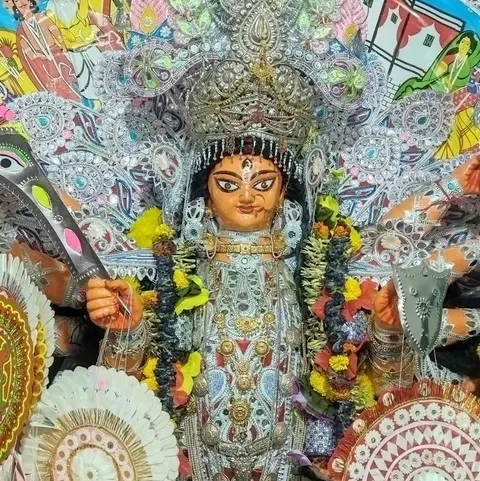
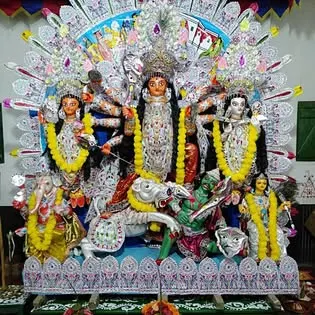
The sabeki pratima
- Ekchala: Ma Durga, Lakshmi, Saraswati, Kartik and Ganesha share a single frame.
- The traditional face: the familiar Bengali face with large, elongated eyes and the third eye on the forehead.
- Daker saaj: ornate white and silver ornaments of shola pith.
- Chalchitra: the painted arch behind the idols, showing scenes from the Puranas.
Rituals by the book
In a sabeki family puja, the rituals follow the scriptures and the family's own customs, often written down in a handwritten puthi. The timings come from the panjika, which is why our Durga Puja 2026 nirghonto gives an exact time for every ritual, down to the minute of Sandhi Puja.
Why Bonedi Bari pujas are usually sabeki
Bonedi Bari pujas, the pujas of long-established families, are among the oldest in Bengal. Because the Puja is a family vow handed down from one generation to the next, change comes slowly. At Ruppur Chatterjee Bari, the Puja that Late Shri Krishnalal Chattopadhyay started about 145 years ago is still performed with Vaishnav rituals, an ekchala pratima in daker saaj, and offerings made only by family members.
Visiting a sabeki puja
- Come early for anjali on Ashtami, and for Sandhi Puja.
- Dress simply, and remove your footwear before entering the temple.
- Ask before photographing a ritual.
If you are looking for a sabeki Bonedi Bari Durga Puja in Howrah, you are welcome at our Durga temple in Ruppur.