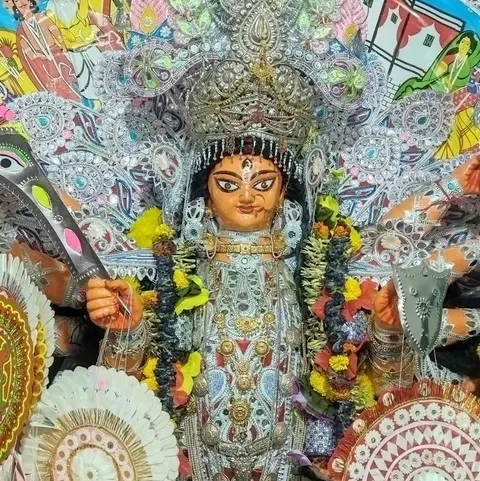
जटाजूट समयुक्ताम अर्धेन्दु कृतेशेखाराम ।
लोचनत्रय संयुक्तां पूर्णेंदु सदृशानानाम् ॥
अतसी पुष्प वर्नाभां सुप्रतिष्ठां सुलोचानां ।
नवयौवन संपन्न सर्वाभरण भूषितम् ॥
सुचारु दशानां तद्वत पीनोंन्नत पयोधराम ।
त्रिभंगस्थान सम्स्तानं महिषासुरमर्दिनीम् ॥— Markandeya Purana
Durga Puja is the most widely celebrated festival in West Bengal. It is the time in autumn when Devi Durga returns to her parental home in the Himalaya from Mount Kailash for ten days. It is also a call to Bengalis all over the world to come home.
In our home, we have been worshipping Devi Durga for the past 145 years. My great-grandfather, Late Shri Krishnalal Chattopadhyay, a landlord back then, started this Puja, and we are the fifth generation still continuing it. There are two traditions of Durga Puja, Vaishnavite and Shakta; we follow the Vaishnavite rituals. Every year, Durga Puja falls in the months of Bhadra and Ashwin.
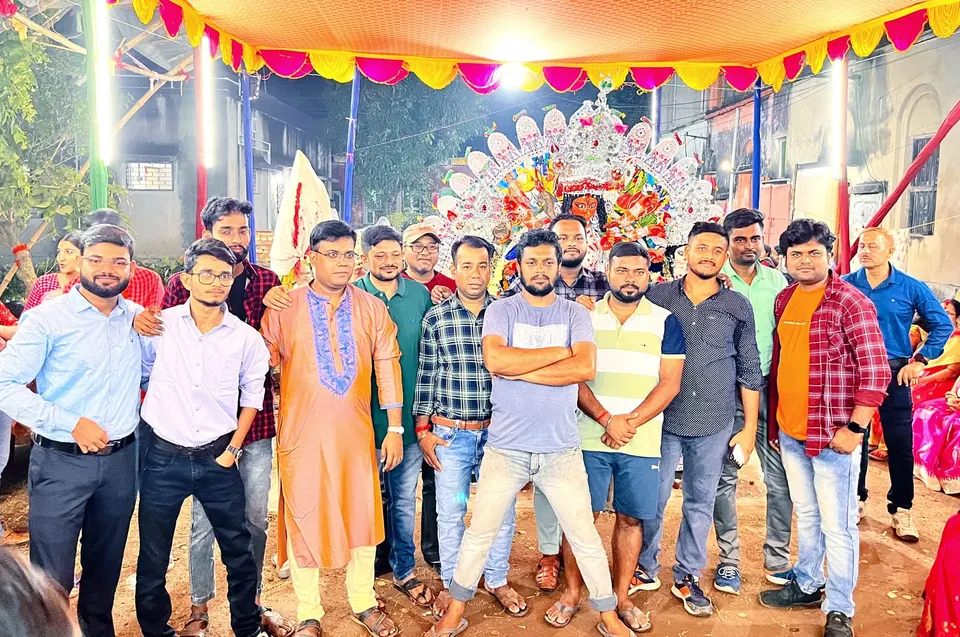
Idol making
Preparation starts after Shri Krishna Janmashtami or after Rath Yatra. On these two auspicious days we collect sacred soil from a nearby river, preferably the holy Ganga, and mix it with cow dung, cow urine, soil from the doorstep of a brothel, and rice husk.
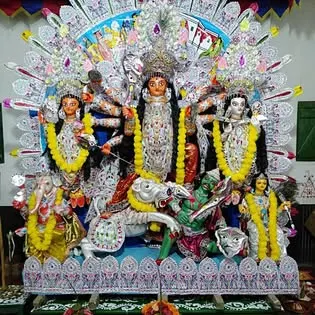
The skeleton of the idol is made of bamboo and hay. Two layers of soil are applied, and the idol is coloured with biodegradable colours and dressed in a Banarasi saree, jewellery and daker saaj.
Mahalaya
This day marks the beginning of Durga Puja, the start of Devi Paksha. Bengalis wake up early in the morning to listen to the special Akashvani Kolkata programme Mahishasuramardini, first broadcast in 1931. On this day we go to the nearest water body to perform Tarpan, a sacred ritual to honour and pay homage to our ancestors. It is believed that during this period the souls of the ancestors visit the earth, and offering them water and prayers ensures their peace and helps them attain moksha (liberation).
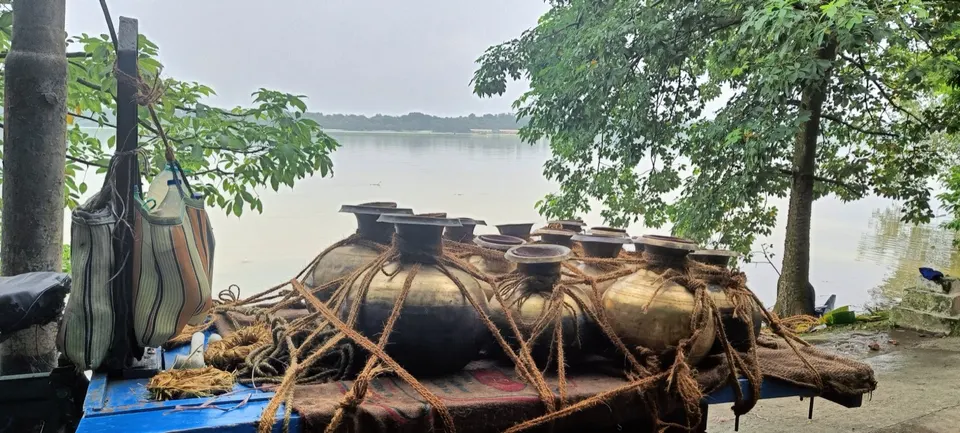
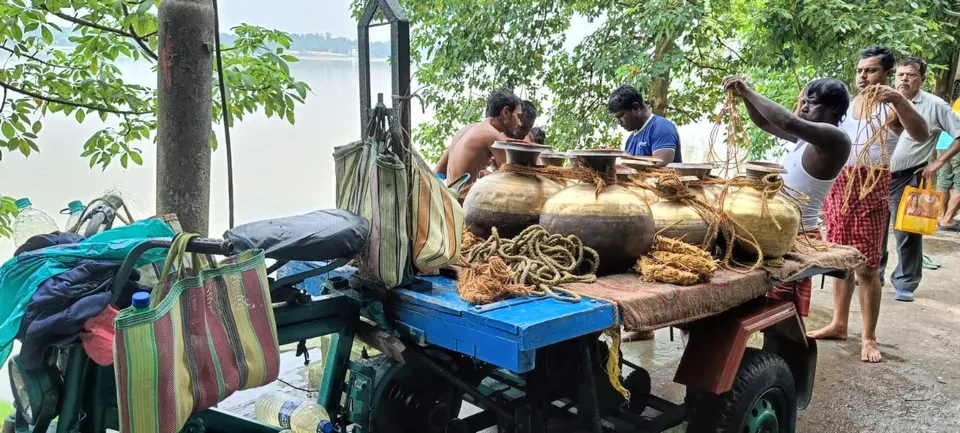
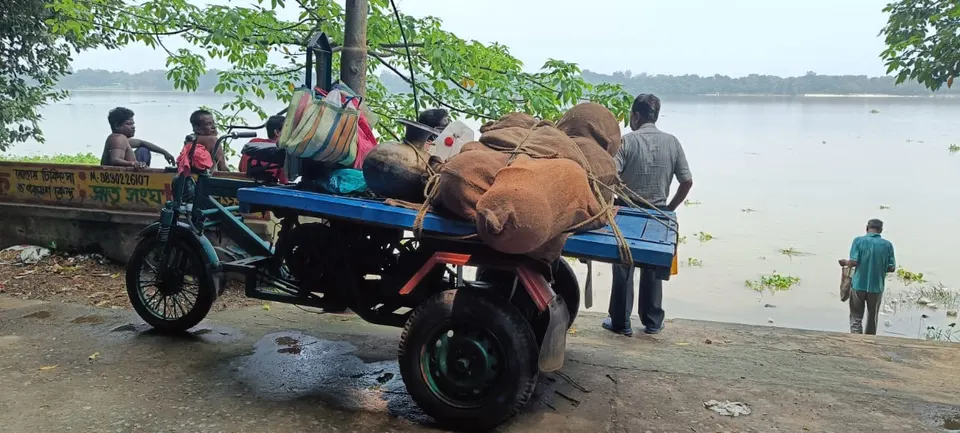
On this day we also bring holy Ganga water for the Puja in large copper pots. A special sweet for the Puja offering, narkel naru (coconut sweets), is made in two flavours, sugar and jaggery. Nothing other than what is made by our family members can be offered to Devi. We also check that nothing has been left out of the last-minute preparations.
Day 1: Prathama
Devi is worshipped in the form of Goddess Shailaputri. In our home the idol is not worshipped at this time; only a replica in an earthen pot with a coconut is worshipped. Every day, Chandi Path is recited by the priest.
Days 2 to 5
Goddesses Brahmacharini, Chandraghanta and Kushmanda are worshipped on these days, with rituals much the same as on the first day.
Day 6: Shashthi
In the evening, Bodhon (awakening) and Adhibas (invocation and sanctification) are performed to formally begin the Durga Puja. Animal sacrifice is also performed in some houses.
Bodhon. According to Hindu belief, the gods go into a period of rest during autumn. To worship Devi Durga at this untimely time, she must first be ritually awakened from her deep slumber. This is also known as Akaal Bodhon. A water-filled copper pot (kalash) is placed at the base of a bel (wood apple) tree, or a branch of it, where the Goddess's spirit is invited to reside.
Adhibas. Performed to sanctify the surroundings and the idol before the main worship begins. The deity and the bel tree are touched with 26 sacramental items to complete the sanctification.
Day 7: Saptami
The main attraction is the Nabapatrika snan, performed at dawn: the ceremonial bathing, in a nearby river or pond, of nine different plants tied together to represent the Goddess herself, while priests chant Vedic mantras.
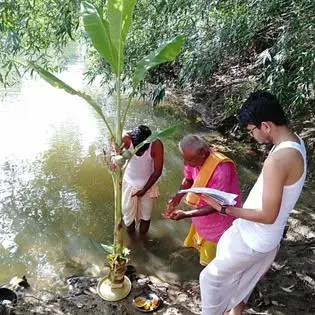
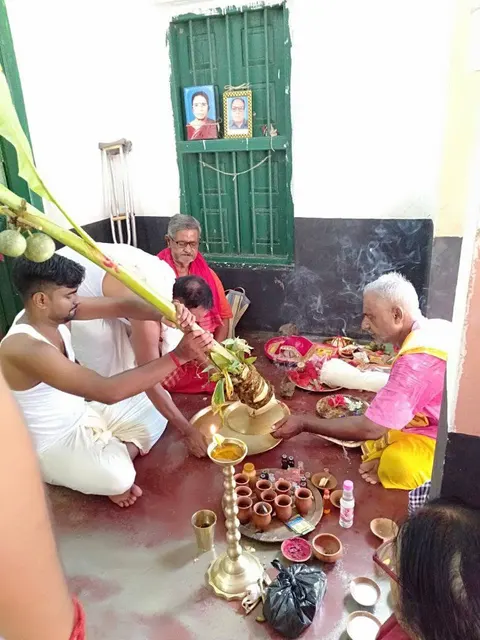
A young banana plant, along with eight other sacred plants (colocasia, turmeric, jayanti, wood apple, pomegranate, ashoka, arum and rice paddy), is tied with yellow jute thread. Each plant represents a specific manifestation of Goddess Durga. After the bath, the Nabapatrika is draped in a traditional white saree with a red border, smeared with vermilion, and placed on a wooden pedestal to the right of Lord Ganesha. After this installation, Pran Pratishtha is performed to invoke life into the main Durga idol.
Day 8: Ashtami
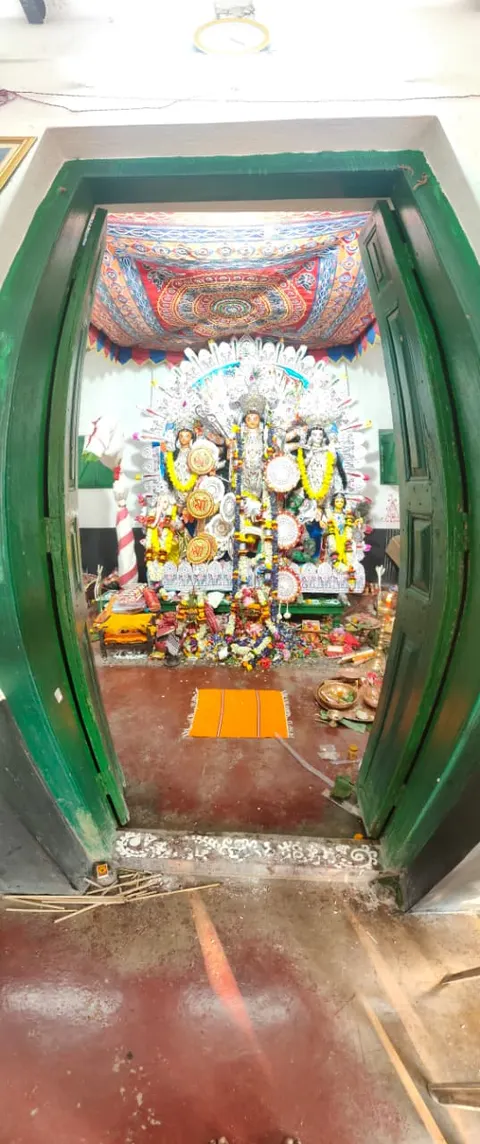
This is the most significant and auspicious day of Durga Puja.
Pushpanjali. The most popular ritual: devotees offer flowers and bel leaves to the Goddess while fasting in the morning, for their prosperity and the fulfilment of their wishes.
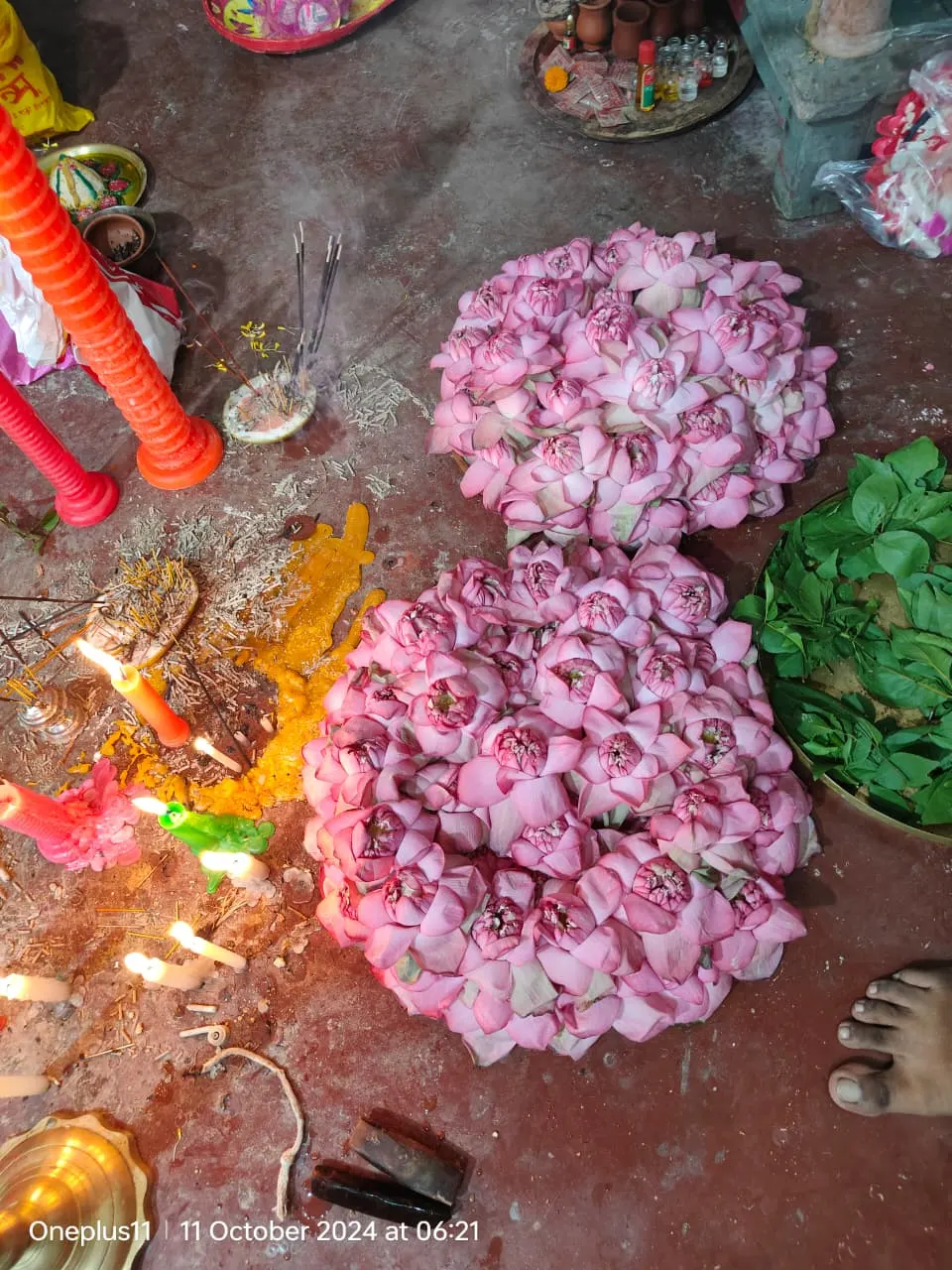
Sandhi Puja. The climax of the day, held in the precise 48-minute juncture when Ashtami ends and Navami begins. It commemorates the moment Goddess Durga manifested as Chamunda to slay the demons Chanda and Munda. The ritual features the lighting of 108 earthen lamps and the offering of 108 lotus flowers and bel leaves. In some houses animal sacrifice is also performed, while others offer a garland of 108 bel leaves and a chandmala, three circular discs made of shola pith, a symbol of purity, beauty, peace and serenity. In our house, a special bhog of chhena (made from milk) is offered.
Day 9: Navami
After the usual Mahasnan and Shodashopachar puja, it is time for the Kanya Puja, or Kumari Puja. A young girl between five and eleven years old is worshipped. Her feet are washed with milk and alta is applied, and she is offered new clothes, gifts and other items. After the Kumari Puja, the Navami Hom (Vedic yajna) is performed. In some houses animal sacrifice is performed at this point.
As this day marks almost the end of the Durga Puja, people make the night memorable with cultural programmes and the traditional Dhunuchi Naach, dancing to the beats of the dhak.
Day 10: Vijaya Dashami
Dashami is the emotional conclusion of the Durga Puja, symbolising the victory of Goddess Durga over Mahishasura and her return to Mount Kailash.
Darpan Visarjan. In the morning, the priest places a mirror in a large bowl of water. Two more bowls are prepared: one holds water mixed with turmeric, the other water mixed with milk and alta. Devotees gaze into the three dishes to catch the reflection of the Devi, symbolising her divine spirit departing from the idol.
Devi Boron. Married women wearing red-bordered white sarees give Ma a formal send-off, offering sweets, betel leaves and sindoor to the Goddess. After the Boron, they smear sindoor on each other.
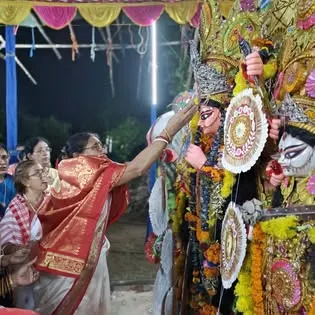
Bishorjan. The idol is taken in a grand procession, accompanied by the rhythmic beats of the dhak, to a nearby river or pond for immersion.
Bijoya greetings. After the immersion, people greet each other with Shubho Bijoya. The younger ones seek blessings from their elders by touching their feet, and everyone shares traditional sweets like naru and nimki.
Special rituals we celebrate in our home
Bhog. Bhog is offered on Saptami, Ashtami and Navami, with a different lentil on each of these three days: moong on Saptami, chana on Ashtami and arhar on Navami. Along with this, rice khichuri, fried vegetables, vegetable curry and payesh are offered, the payesh featuring small banana fritters soaked in its sweetness. A special dish called mochar ghonto, made from banana stem and banana flower, is also offered. At night, luchi and narkel naru are offered as bhog.
Aparajita. In the morning after Darpan Visarjan, all the male members of the family gather to wear butterfly-pea vines (Aparajita) as armbands. These vines are also tied around children's wrists for long life and protection from negative influences, forming a protective shield, as Devi Aparajita is revered as a fierce, destroyer form of Devi Durga.
Dashami. On this day, after the idol immersion, we inscribe "Shri Shri Durga Mata Sahay" on a banana leaf with a bel twig, using alta as ink, and place it reverently on Devi Durga's altar.
Day 11
As mentioned earlier, we worship Devi Durga at home following Vaishnavite rituals, and strictly avoid non-vegetarian food during these ten days. On the eleventh day, we break this by eating fish or mutton.
As Durga Puja draws to its vibrant close, we celebrate not just ten days of fervent devotion, but the eternal triumph of good over evil. Far beyond ritualistic worship, in Bengal it binds Bengalis into a single, beating heart, drawing the diaspora home from distant shores like the USA and the UK, or inspiring joyous pandals in foreign lands when the journey home is impossible. This grand spectacle fuels Bengal's economy while etching its soul into the world, and it earned a rightful place on UNESCO's Representative List of the Intangible Cultural Heritage of Humanity in 2021. In Maa Durga's grace, we find unbreakable unity, unyielding strength, and the promise of her return.