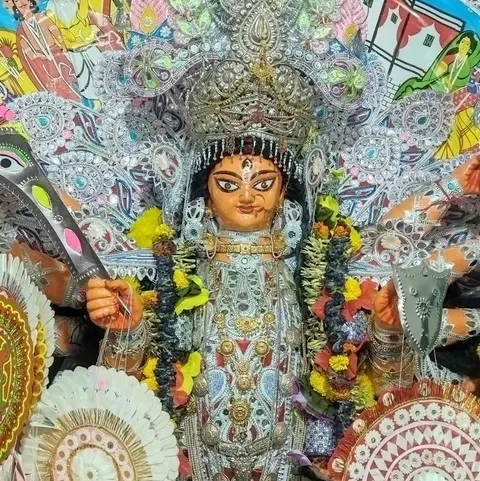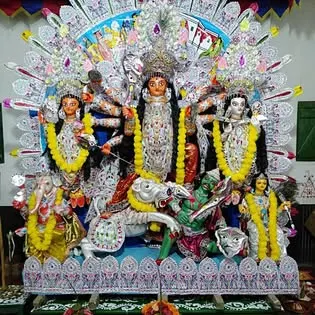
Walk into any traditional Durga Puja on Saptami and you will see, beside Ganesh, a small figure wrapped in a red-bordered white saree like a new bride. She is Kola Bou, and she is one of the oldest parts of the Puja.
Nine plants, nine goddesses
Nabapatrika means "nine leaves". Nine plants are tied together with a white aparajita creeper, and each one stands for a form of the Goddess:
| Plant | Form of the Goddess |
|---|---|
| Banana (kola) | Brahmani |
| Colocasia (kochu) | Kalika |
| Turmeric (holud) | Durga |
| Jayanti | Kartiki |
| Bel (wood apple) | Shiva |
| Pomegranate (dalim) | Raktadantika |
| Ashoka | Shokarahita |
| Arum (maankochu) | Chamunda |
| Paddy (dhan) | Lakshmi |
Many scholars see this as a memory of the Puja's roots as a harvest festival, when the Goddess was worshipped as the power in every growing plant.
The dawn bath
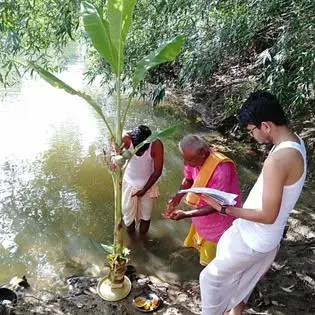
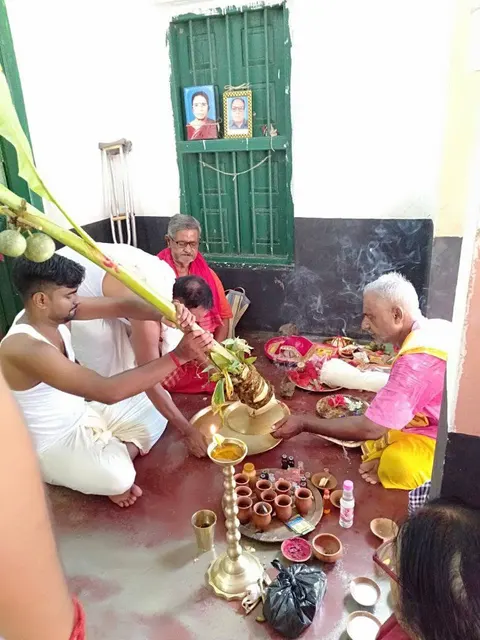
Before sunrise on Maha Saptami, the Nabapatrika is carried to the ghat to the beat of the dhak. There it is bathed with holy water, dressed in a new saree with a touch of sindoor, and brought back to the Thakur Dalan. Only then does the worship of the pratima begin.
Why "bou"?
Because of the saree, many people think Kola Bou is Ganesh's wife. In the scriptures, though, she is the Goddess herself, in her plant form. The name has stuck anyway.
Join us at dawn on Maha Saptami for the Nabapatrika Snan. It is one of the most beautiful moments of our Puja.